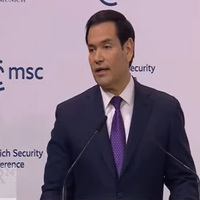


MUNICH -- On his second day at the Munich Security Conference, US Secretary of State Marco Rubio set out to calm nerves and sharpen focus: Ukraine and security, he signaled, very much remain the center of gravity of Washingtons transatlantic policy.
Although his morning address avoided direct mention of Ukraine, the omission proved fleeting. As soon as the floor opened for questions, the war -- and Americas role in brokering its conclusion -- moved to the forefront.
SEE ALSO:
Rubio Wraps Warnings In Warmth As Europe Breathes A Sigh Of Relief
That focus sharpened further in aninterviewwith Bloomberg TV immediately after his address, where Rubio offered his clearest assessment yet of how the grinding conflict may reach its end.
He stated he does not expect the war to conclude in what many would consider a traditional loss for either side, arguing that Russia is unlikely to achieve its original, sweeping objectives.
Instead, he suggested, Moscows ambitions have narrowed to consolidating the roughly 20 percent of the Donetsk region that it does not yet control -- a goal he acknowledged would require "hard" concessions from Kyiv, both tactically and politically.
Finding a formula acceptable to Ukraine and tolerable to Russia, he said, remains the primary challenge. It may not work out, Rubio cautioned, though he maintained that the United States would continue pressing for a deal.
SEE ALSO:
Zelenskyy Calls For Strong Security Guarantees Against 'Slave To War' Putin
He pointed to intermittent signs of progress in recent weeks and noted that US negotiators Steve Witkoff and Jared Kushner would resume talks in the coming days.
A Marathon of Alliances
From that point, the day unfolded as a sustained exercise in high-stakes diplomacy.
Rubio first convened with his G7 counterparts, including Ukraines foreign minister. The discussion ranged widely -- from conflicts destabilizing Africa and the Middle East to mounting security pressures in the Indo-Pacific and the Western Hemisphere.
Yet Ukraine remained the unavoidable undercurrent. Rubio reiterated the US commitment to promoting stability in Venezuela and negotiating an end to the Russia-Ukraine war, State Department spokesman Tommy Pigott said, as ministers pledged tighter G7 coordination against a spectrum of global threats.
SEE ALSO:
At Munich Conference, Merz Urges US, Europe To 'Repair And Revive' Transatlantic Trust
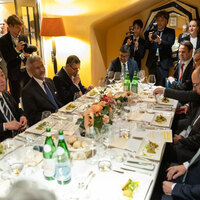
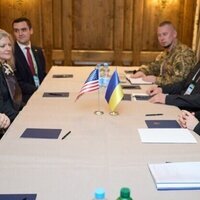
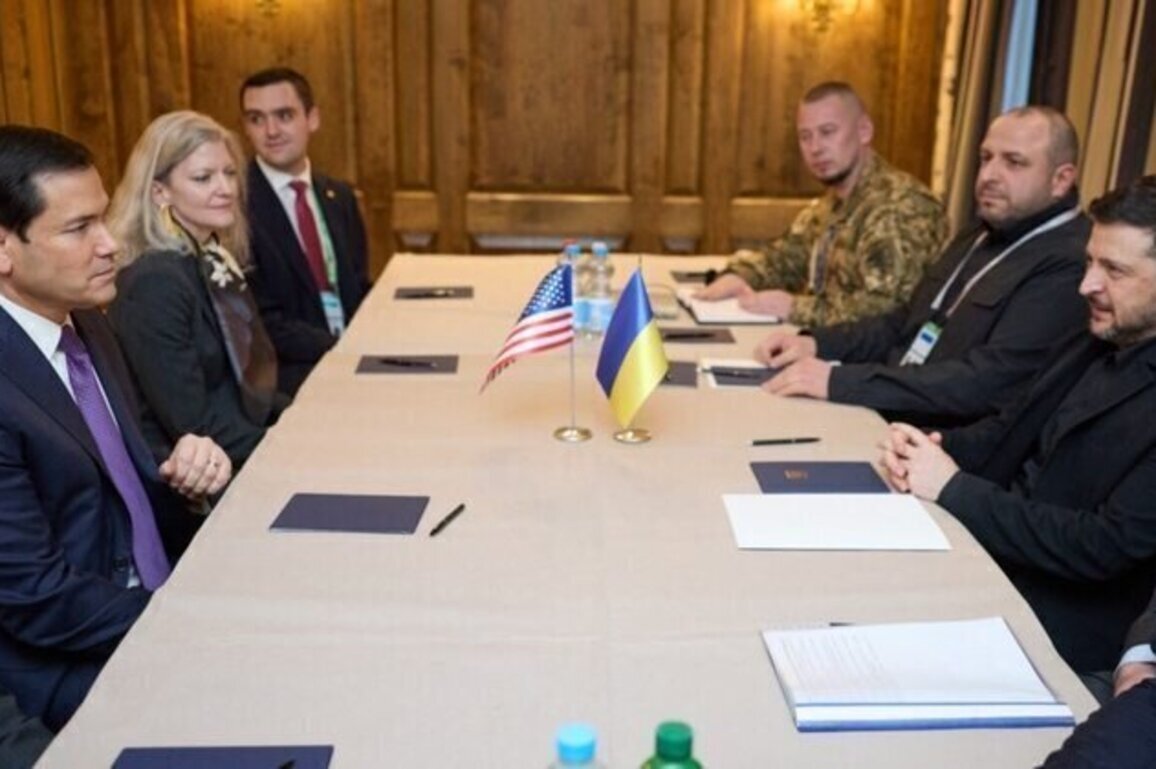
On the conference sidelines, Rubio met President Volodymyr Zelenskyy for roughly 40 minutes. In a statement posted to Telegram, Zelenskyy said he briefed Rubio on the situation on the front line, ongoing Russian attacks, and the consequences of the attacks on the energy system.
The two also examined the diplomatic track in detail, including next weeks trilateral talks in Geneva.
Its important that the planned negotiations in Geneva be productive, and I thank the United States for its constructive approach, Zelenskyy said.
The consultations extended beyond the secretary. Zelenskyy also spoke with Trump envoys Witkoff and Kushner ahead of the next round of talks, discussing developments since their previous meetings in Abu Dhabi. Some elements, he noted cautiously, could not yet be made public.