

Panamas presidentpushed back against Beijingthis weekafter the countrys top courtannulled a Hong Kong-backed firms right tooperatekey terminals on thePanamaCanal, prompting sharp criticism fromChina.
The decision by Panama's Supreme Court thrust the strategic waterwayback into the spotlight, a year after US PresidentDonald Trumpvowed in his inauguration speech to take it back.
In a post on X on Wednesday, PanamasPresidentJose Raul Mulinorespondedto criticism from China, statingthat the Central American country is governed by the rule of law and respects the decisions of the judiciary, which is independent of the central government.
The Supreme Court ruled last week that a concession held by a subsidiary of Hong Kongs CK Hutchison Holdings tooperateterminals in the Panama Canal wasunconstitutional. The court cited legal irregularities in the awarding and oversight of the contract.
The decision effectively strips CK Hutchison of its long-standing management role at the key terminals, halting its operations in the canal zone.
Analysts say the ruling carries broader geopolitical implicationsgiven Chinas strategic interests in the waterway, aligning with US efforts to curb Chinese influencein the region.
'Political backstabbing'
Beijing has reacted withstrong rhetoric, describing the Panamanian decision as "political backstabbing" anda"legal absurdity,while hinting at political and economic consequences.
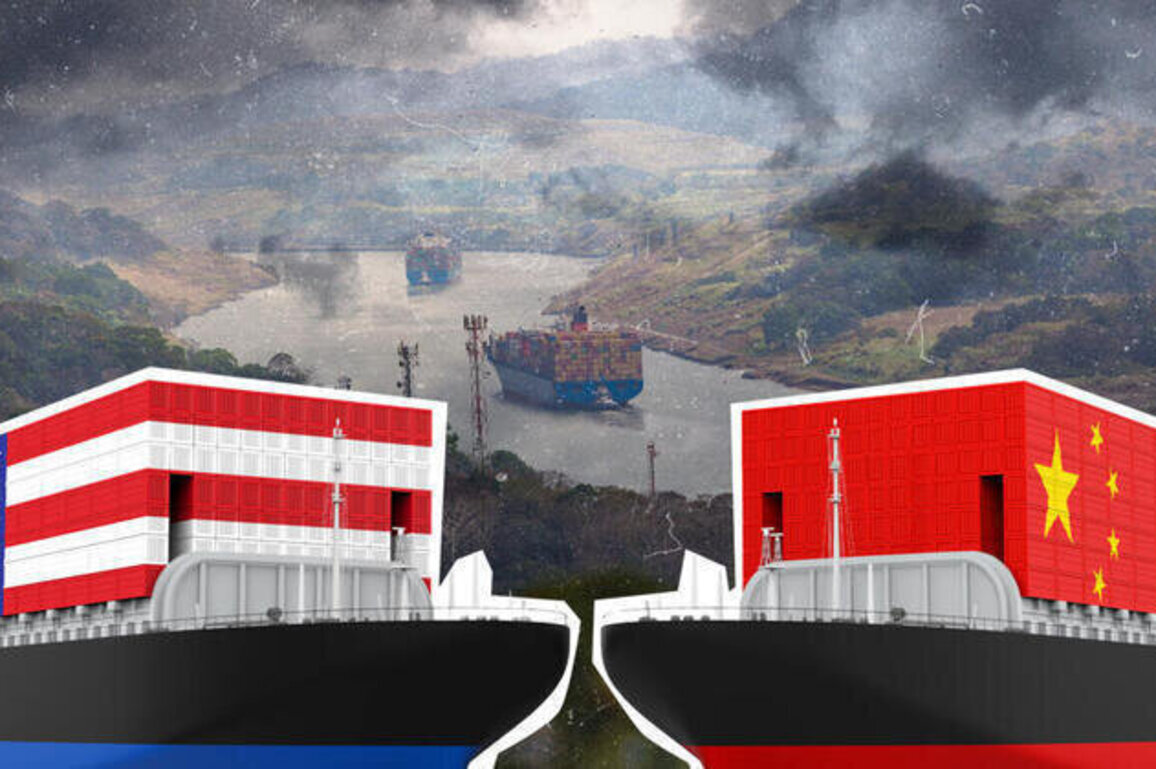
The canal, a vital artery for global trade, has become a geopolitical focal point, highlighting the intensifying US-China struggle for influence in Latin America. The waterway links the Pacific and Atlantic oceans and is crucial for shipping.
Read moreThe Chinese interests behind Trumps Panama Canal bluster
For China, it is a strategichot spot,according to Rodrigo Martin, a ChinaLatin America relations expert at the University of Salamanca. The canal allows Chinese shipping to reach Atlantic markets without circumnavigating South America. China doesnt want to lose the influence it has [there], Martin said, underlining the potential strategic cost.
For the United States, the canalremainsno less significant. Around 40 percent of American trade passes through the waterway, and Washington has historically regarded the region as within its sphere of influence. ThePanama Canal Zone until very recently, 25 years ago, was controlled by the United States. It was adominion, so to speak. So(China's presence)doesntgo down very well with the American way of thinking, explained Amalendu Misra, professor of international politics at Lancaster University.
America's 'backyard'
Chinas presence in Panama haslargely beencommercial, with private firms like CK Hutchison operating key port terminals. The Supreme Court ruling strips China of previously uncontested access to the canal, weakening its geostrategic and economic leverage in the region, Misra said.
The verdict also sends a clear message to other Latin American countries that US scrutiny is unavoidable. China cannot expect any other Latin American country to come to its aid because geographically they are in the backyard of the United States, but not China, he added.
Watch morePanama Canal caught in power struggle as US and China vie for trade dominance
The decision is also a warning to Chinese companies. They would come to realize with the Panamanian Supreme Court verdict that there is nothing that China can do if your investment goes down the drain, Misra said, highlighting the political risks that now outweigh purely economic considerations.
Panama is not unique. Mario Esteban, a regional expert and professor at the Autonomous University of Madrid, recalled aChinese-Germanconsortium that won a contract to manage Chilean passportsin 2021. He noted that US political pressure played a decisive role in the Chilean authoritiesultimately cancellingthe contract, even though the official reason given was technical. The Panama case may now serve as a blueprint for other countries.
Misra warned that the ruling could trigger wider regional shifts: Many Latin American and Central American countries are going to become stronger now by taking this example, by saying no to Chinese control of their resources, their ports and other things. Mexico, where Chinese investment is significant, could be the next focus of scrutiny.
'Beginning of the end' for China's regional influence
Tabita Rosendal, a specialist on China's political and economic influenceat Lund University, saidBeijingis balancing a dual strategy: signalling strength to its regional partners while avoiding escalation with the United States. She added that China might respond in terms of trade and investment pressure, but also wants stability in its relationship with the US, particularly ahead of the state visit by Trump scheduled for April.
Read moreTrump's expansionist designs, from Greenland to the Panama Canal
Martin echoed this caution, suggesting that Chinas immediate options arelikely limitedto symbolic measures, such as slowing infrastructure projects or reviewing trade agreements, with any response shaped by how the US approaches the upcoming visit to China.
Esteban suggested thatPanama'sSupreme Court ruling may be just the first move in a broadertussle for influence between the US and China, potentially prompting Beijing to launch a diplomatic offensive to present itself as a reliable partner for Latin American nations, in contrast to what it sees as an increasingly assertive United States.
At the same time, Misra emphasised that the ruling significantly limits Chinas leverage in the region. He concluded that the decision neuters Chinas power and influence in Central America and Latin America, adding that this is the beginning of the end for Chinese economic supremacy in Latin America.
This article was adapted by Natasha Li.Click hereto read the original in French.
Originally published on France24