

Two days before his kidnapping, President Nicols Maduro gave aninterviewto Spanish writer Ignacio Ramonet and explained that the war on Venezuela is a cognitive one,
By Leonardo Flores
The term cognitive war is relatively new, and it sheds light on recent discourse around Venezuela. One ofNATOs definitionscharacterizes cognitive war as unconventional warfare used to alter enemy cognitive processes, exploit mental biases or reflexive thinking, and provoke thought distortions, influence decision-making and hinder actions, with negative effects, both at the individual and collective levels. It goes beyond propaganda or psychological warfare. Another NATOsourcesays it is not the means by which we fight; it is the fight itself. The brain is both the target and the weapon in the fight for cognitive superiority.
Maduro understood this, saying that to counteract a cognitive war, you have to create a force of conscience, a force of values, a spiritual force, and fight with the truth. Our greatest weapon is not a nuclear rocket, our greatest weapon is the truth of Venezuela.
In a recent Venezuela Solidarity Networkwebinarabout the Venezuelan peoples reaction to the January 3rd attack, Ana Maldonado of theFrente Francisco de Mirandasaid, The first victim of this war was truth. She explained that hours after the bombing and kidnapping, Trump went on television to say the military operation was easy, and that narrative was widely accepted.
Erased from the collective memory were ten years of economic warfare that cost Venezuela tens (if not hundreds) of thousands of lives, $630 billion in damages, and a migration crisis that separated countless families. Erased were the attempted color revolutions of 2014 and 2017, the attempted presidential assassination of 2018, the imposition of a fake president in 2019, and the failed mercenary incursion of 2020. Erased was the U.S. declaring Venezuela an unusual and extraordinary threat in 2015 and the imposition of increasingly harsh unilateral coercive measures (so-called sanctions), including during the pandemic.
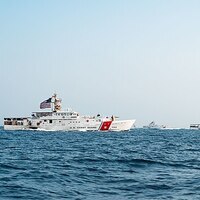
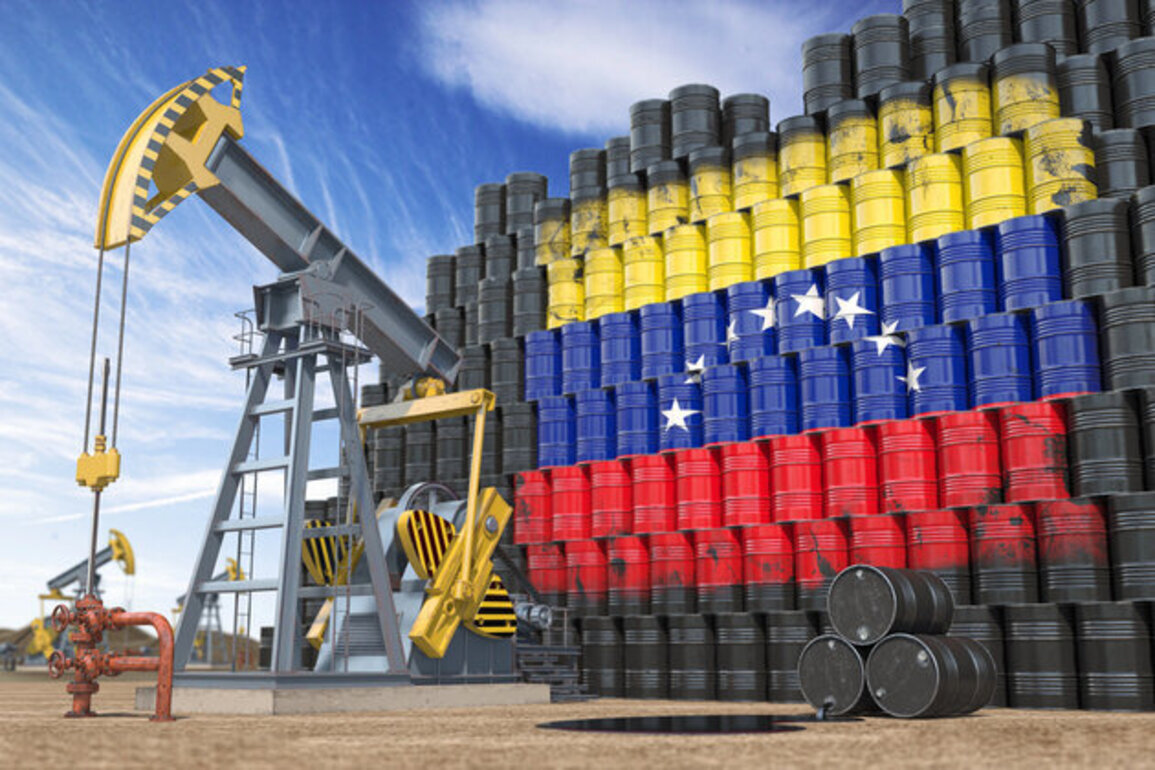
Erased was the months-long, still ongoing U.S. naval presence in the Caribbean and the declaration of a no-fly zone. Erased was the naval blockade that chased down and seized ships attempting to trade in Venezuelan oil.
No, the January 3rd attack wasnt easy, nor was it a victory. Though the U.S. demonstrated its military advantage, it has not won the cognitive battle. The superiority shown by the Venezuelan people surpasses anything [the U.S.] has done. Their military attack needed an internal war, a fratricidal war they did not achieve, explained Maldonado. There was no such war, no coup, no regime change.
The January 3rd attack would have been the perfect opportunity for a new color revolution or rebellion. Maldonado stressed the failure of the "unprecedented cognitive war of provocations, intrigue, of wanting to seed doubts and division. The grassroots, the government, the military and the police remain united behind acting President Delcy Rodrguez. The fact that we have and continue to demonstrate such unity shows our superiority. Our superiority is organic. It is revolutionary. It is popular. It is the people building peoples power, Maldonado continued.
Venezuelans continue building peoples power, including through plebiscites on March 8, when the nations 5,336 communes vote on funding local projects. They are in constant mobilization, making it known they want peace and the return of Maduro and Flores. The streets are theirs, with Venezuelan fascists being increasingly sidelined. They are creating culture and insisting that a unified people will not yield, as musician Akilin sings in this video:
MI TIERRA. AKILIN - PIAKOA - MALENA D'ALESSIO - GAMBEAT - TIGRON CAMPESINOS - EMILIANO.
Those that claim that Venezuela is now a protectorate or colony that has sold out or been betrayed dont seem to be in conversation with Venezuelan revolutionaries. The global solidarity movement, which should be organizing for Maduro and Cilia, calling for an end to sanctions and the withdrawal of U.S. forces from the Caribbean, instead finds itself having to counter such speculation, as Manolo de los Santos did in anexcellent article.
A delegation of peace activists went to Venezuela in late February to hear directly from the people. In areport-back webinar, CODEPINK co-founder Jodie Evans observed that Venezuelans are engaged in building a futurethey are in constant dialogue [with each other] and trying to find ways to thread a needle. The threats against Venezuela are ongoing and horrific, she said, noting that these horrors are being breathed down their necks every day and they are staying quite committed. The unity up and down the Bolivarian Revolution is what it needs to survive.
Yes, the United States controls the oil trade and pushed for changes in the hydrocarbon law. Yet there is reason to believe the Venezuelan people may see material gains from these concessions. The Venezuelan government is playing a long game that points towards sanctions relief. Domestically, the National Assembly approved an amnesty law aimed at reconciliation with the moderate opposition, which could be an important factor in preventing or blunting any future U.S. operations aimed at fomenting civil unrest. In these negotiations, the Venezuelan peoples red lines havent been hit yet, as Evans put it.
Maduro, in his final interview before the kidnapping, said he was truly happy how millions of men and women in Venezuela and the world defend Venezuelas truth. In Venezuela, the defense of that truth happens every day, with constant mobilizations since the morning of the attack.
In the rest of the world, that defense feels lacking. This is not the time for over-analyzing every misstep, real or imagined, by the Bolivarian government. It is a time to relentlessly denounce the kidnapping of a president and a legislator. This is the moment to defend Latin America and the Caribbean as a zone of peace. It is an opportunity to counter Trumps Monroe Doctrine, the plans for a Greater North America, and the so-calledShield of the Americas.
We can fight against this cognitive war by insisting on an alternative vision for U.S. foreign policy, one in which the country becomes agood neighborby centering its relationship with the hemisphere (and the world) on peace, solidarity and shared prosperity.
Leonardo Flores is a Venezuelan-American organizer with CODEPINK.
Codepink