

Since the US invasion of Venezuela on January 3rd and the abduction of President Nicols Maduro, Nicaraguas opposition figures who enthusiasticallyidentified withtheir confederates in Venezuela have hoped that regime-change efforts in Caracas would encourage Washington to destroy Nicaraguas Sandinista government.
John Perry and Roger D. Harris
Republican senator Rick Scottthinksnow is the time to fix Nicaragua as well Cuba. Commentator James Bosworth, a cheerleader for US imperialism,asks, Why hasnt Trump gone after Ortega in Nicaragua?
Such speculation is unsurprising. Both Trump administrations have endorsed the designation of Nicaragua, as well as Venezuela and Cuba, as an unusual and extraordinary threat to the national security and foreign policy of the United States. Trumps former adviser John Boltondescribedthe three countries in 2018 as a troika of tyranny, while his current Secretary of State Marco Rubiocalls themenemies of humanity.
A few days after the attack on Caracas, TrumpsaidCuba was ready to fall and should make a deal before its too late. Cuban President Miguel Daz-Canel responded: No one dictates what we do. Along with Cuba, the governments of Mexico and Colombia werewarnedthat they might be next in Trumps sights, as he maintains his huge military deployment in the Caribbean and continues his so-called war on narcoterror.
Clearly, Venezuela and Cuba are under the greatest US pressure. Neither Trump nor Rubio has included Nicaragua in their follow-up threats, but the country is not being ignored.
The court indictment against Maduro accuses him of leading a regional drug-trafficking network that ran through Central America. Although Nicaragua is not specifically named, opposition media were quick toclaimthat the Sandinista government was being denounced. Trump himself, commenting on Hondurass November 30 election in Truth Social, seemed to suggest this when heasked: Will Maduro and his Narcoterrorists take over another country like they have taken over Cuba, Nicaragua, and Venezuela?
In reality, unlike its neighbors, Nicaragua is largely free of drug-related violence. Its army operates what it calls a retaining wall (muro de contencin) against drugs transiting the country, and regularly publicizes drug seizures. Despite this, the State DepartmentclassifiesNicaragua as a transit country for narcotics and the US Drug Enforcement Administration withdrew its officials in 2025, claiming poor cooperation from authorities.
On January 14, the security minister in neighboring El Salvador (a Trump ally )accusedNicaragua of allowing a drug shipment worth over $9 million to cross the waters between the countries by boat. Nicaragua stronglydeniedthe allegation, pointing out that it is among the safest countries in the region and cooperates with El Salvador in dealing with narcoterrorism, including extraditing members of Salvadoran drug-trafficking gangs arrested in Nicaragua.
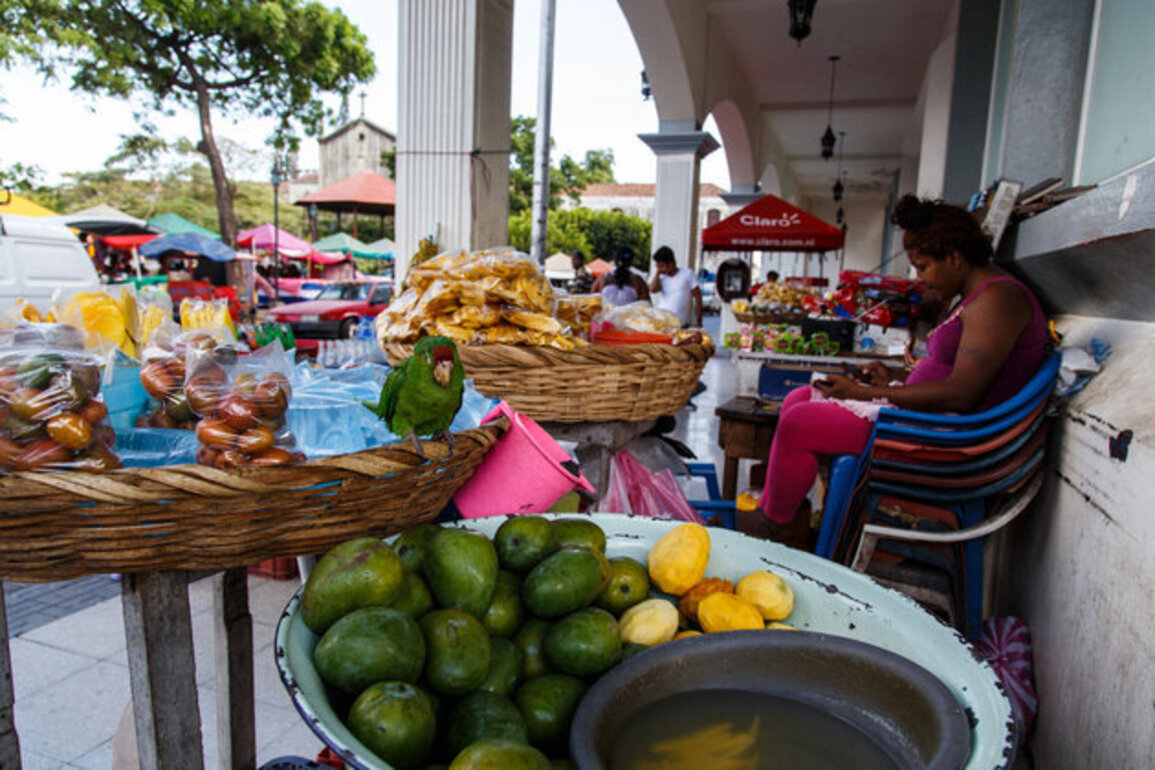
Nicaragua continues to be unjustly singled out for criticism on issues beyond drugs. In July 2025, Nicaraguas reputation as a safe country was implicitly recognized even by the US Department of Homeland Security, whichacknowledgedthat it has become a worldwide tourist destination. Numerous articles, including in theNew York TimesandTravel and Tour World, encouraged people to visit.
But, as Nicaragua-based commentator Becca Renkpoints out, this has drawn punitive measures from US authorities, including sanctions on tour operators (allegedly for facilitating migration to the US), advisories warning against Nicaraguas supposed dangers, and more. Despite a flurry of positive reports in the travel press, U.S. officials say Americans should avoid Nicaragua because its an authoritarian regime, the New York Timessaidin June 2025, contradicting its earlier recommendation to visit the country.
Perhaps the most bizarre allegation is that Nicaraguascelebrated religious traditionsare threatened by its government. In December,reports appearedclaiming that bibles could no longer be brought into the country based on a notice supposedly photographed in a Costa Rican bus terminal. The story was widely repeated, with the US Commission on International Religious Freedomreportingthat not only are bibles banned, but so is praying in public. The stories fitted the State Departmentsbroader narrativeof religious repression.
But the reports were completely false. Nicaraguan churchesconfirmedthere is no such ban, the bus companys advice to travelers does not mention bibles, and farcical attempts by a pair of Youtubers to prove that the ban existsproved fruitless.
Nevertheless, Christian Solidarity Worldwide, based in the UK, whichposted the original claimabout the ban, ignores requests to remove it.
More seriously, December also brought aheavily biased reportfrom the US Trade Representative. The report accused Nicaragua of labor rights violations, based largely on evidence from Nicaraguan opposition groups, many funded byUS sourcessuch as the National Endowment for Democracy. The Trade Representative argued that Nicaragua should be expelled from the regional trade treaty and that punitive, 100 per cent tariffs should be imposed on its exports to the US.
Had these sanctions been applied, they would have drastically affected Nicaraguas exports and employment in many key areas of the economy. Fortunately, after lobbying by US businesses heavily invested in Nicaragua, they were watered down considerably.
However, similar damage could result from federal legislation. Representatives Chris Smith and Mara Elvira Salazar haveintroducedthe Restoring Sovereignty and Human Rights in Nicaragua Act of 2026. If passed, it would trigger targeted sanctions on Nicaraguan businesses, block new US investment and further restrict access to international finance.
Otherproposed legislation, introduced by Senator Rick Scott, would link sanctions against Cuba, Venezuela, Nicaragua, and Bolivia. All four countries (in the case of Bolivia, in the recent past) have been examples of alternative models of government that prioritize the interests of the poor, not those of international capital.
Nicaraguas trade is closely linked to that of its neighbors. Honduras, under Xiomara Castro, has been a close ally. But this month she hands over the presidency to neoliberal Nasry Asfura, who won the countrys recent electionfollowingTrumps blatant interference. Nicaragua will then be left as the only progressive government between Mexico and Colombia. Nevertheless, it can probably count on some reluctance in Central America to ostracize a country located on key trade routes and which has a crucial role in regional electricity distribution. Indeed, Asfura has already disappointed anti-Sandinistas by promising good bilateral relations.
Some commentators, such asPoliticosNahal Toosi note that Nicaragua is oddly missing from Trumps list of targets now that Washington is further asserting hegemonic power in the Western Hemisphere.
Justifying intervention on the basis of fighting narcoterror, however, is even more difficult in Nicaraguas case than it was for Venezuela. Claims that President Daniel Ortega is linked to Nicols Maduros fictitious Cartel de los Soles are unsupported by Washington officials. Politico cited one anonymous US official who said that Nicaragua is cooperating with us to stop drug trafficking and fight criminal elements in their territory.
Nicaragua is a low-income country which, unlike Venezuela, lacks oil or other strategic resources coveted by the US. Its 1979 revolution, the subsequent US-backed Contra war and more than four decades of military and economic pressure from the US, including a coup attempt in 2018, have prepared Nicaragua. Resistance to any overt military attempt to overthrow the Sandinista government would be massive. Older Nicaraguans recall 16 years of neoliberal rule after the Sandinistas lost power in 1990, when public services were decimated.
Since returning to office in 2007, the Sandinista government has massively invested in hospitals, schools and housing; the country is free of the high crime levels that bedevil its neighbors. Unlike Cuba and Venezuela, its economy has not so far been heavily damaged by US coercive measures.
Furthermore, Nicaraguas opposition groups are deeply divided, enjoy little popular support, and offer vague promises of democracy that amount to a return to neoliberalism. They have little currency among Trumps Florida base, fixated on regime change in Venezuela and Cuba. As Juan Gonzalez, a former Latin America aide to President Biden,toldPolitico: The lesson from Nicaragua is: Dont matter too much, dont embarrass Washington and dont become a domestic political issue.
Trump and his advisers may also have learned a lesson from kidnapping Venezuelas head of state: it failed to remove the government and instead strengthened its popular support. Pro-US Venezuelan politicians like Maria Corina Machado, who promised Washington that they would have public backing, were deceitful. If they had been put in charge, the country would likely have descended into chaos. This was true for Venezuela, but it would also be true for Cuba and Nicaragua.
Nicaraguas respite, however, is unlikely to be long-lasting. Venezuela, because of its strength and leading role, has been the primary target. Striking Venezuela kills two birds with one stone. Every blow against it is also directly hits Cuba, which is far more dependent on Venezuela than is Nicaragua. But if both Venezuela and Cuba are significantly weakened by the imperial siege, Nicaragua will be ever more isolated and ripe for attack. In short, it is not so much that Nicaragua has escaped the attention of US imperialism, but that its time has not yet come.
Nicaragua-based writerJohn Perryis published in the London Review of Books, FAIR, CovertAction and elsewhere.Roger D. Harrisis with theTask Force on the Americasand theUS Peace Council. Both are members of theNicaragua Solidarity Coalition.
Pressenza New York