

Klaus Heinrich Raditio
Download PDF
Jan 15 2026
anidaaripin/DepositphotosReinhold Niebuhr (18921971) is undoubtedly one of the most influential thinkers in American political thought. The New York Times once described him as theSupreme American Theologian of the Twentieth Century. As the foremost proponent of Christian Realism, Niebuhr earned the title of theAmerican consciencea designation that remains strikingly relevant, perhaps even more so in the Trumpian era. To adopt a Niebuhrian perspective is to return to the moral conscience of America asone nation under God. This article aims to offer a critical assessment of U.S. actions in Caracas earlier this year through the lens of Reinhold Niebuhrs thought.
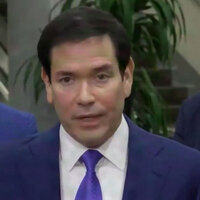
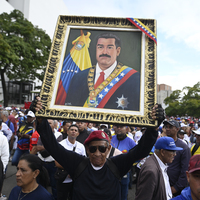
On 3 January 2026, the United States launched Operation Absolute Resolve, an operation that extracted Venezuelan President Nicols Maduro and his wife, Cilia Flores, from Caracas. The stated objective of the operation was to halt drug trafficking into the United States. Secretary of State Marco Rubio characterized the action as a law-enforcement operation rather than an act of war. He further denied that oil constituted the primary motive, while acknowledging Washingtonsconcern over the significance presence of US rivalsChina, Russia, and Iranin Venezuelas strategic sectors.
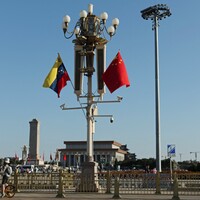
These concerns are not unfounded. The China Development Bank has extended approximatelyUS$19 billion in oil-for-loans dealsto Venezuela in order to secure energy supplies beyond areas of US dominance. Both countries in 2023 elevated ties in 2023 to anall weather strategic partnership. Iran has reportedly established drone-manufacturing facilities on Venezuelan territory, while Russia and Venezuela have finalized acomprehensive strategic partnershipcovering energy, mining, and defense cooperation. From Washingtons perspective, Venezuela could pose a grave security threat should it permit rival powers to establish a military presence in the Western Hemisphere.
US actions in Caracas can be examined through several dimensions of Niebuhrian thought. With regard to power, Niebuhr consistently affirmed the necessity of political authority and coercive force as instruments for the pursuit of justice. He was emphatically not a pacifist. As the preeminent power emerging from the Second World War, Niebuhr believed that the United States bore a responsibility to helpshape a just and peaceful international orderbeyond its own borders. America, in his view, was called to restrain the forces of anarchy in international relations by exercising its preponderant power responsiblyboth in self-defence and in the maintenance of global order.
At the same time, Niebuhr warned that every use of power is morally ambiguous. Nevertheless, he argued that action, even when morally imperfect, is sometimes preferable to inaction that allows destructive forces to flourish unchecked. Power, therefore, must be exercised prudently to prevent what he famously described as thechildren of darknesspolitical actors driven by excessive ambition and the will to dominatefrom prevailing.
Applied to the Venezuelan case, U.S. military power could arguably be used to deter Caracas from deepening strategic cooperation with American rivals. The Trump administration might legitimately draw a red line against the establishment of foreign military bases on Venezuelan soil. Yet Operation Absolute Resolve appears less as an exercise in responsible deterrence than as a display of overwhelming force. Given that Venezuela does not constitute an imminent threat to US national security, the Trump administration should have pursued diplomacy rather than resorting to an overseas operation. This move departed from Niebuhrs emphasis on restraint and prudence in the exercise of power and underscored the shortcomings of Trumps diplomatic approach.
More critically, a Niebuhrian perspective raises serious questions about the moral legitimacy of the operation. Niebuhr repeatedly warned the United States against the temptation of imperialismthe impulse to dominate other nations in the name of moral or ideological ideals. Such behavior, he argued, undermines the very just and peaceful international community the United States claims to promote. What, then, entitles the Trump administration to act in this manner? Is America so exceptional as to place itself above the norms it demands of others?
Niebuhr firmly rejected any theology of American exceptionalism grounded in divine election. Instead, he advocatedhumility as a central political virtue. For Niebuhr, humility is not weakness but a profound source of moral strength, enabling nations to act responsibly within a tragic and imperfect world. Pride, by contrast, constitutes the gravest sin. In The Irony of American History (1952), Niebuhr explicitly denied that the United States was a divinely chosen nation, warning that its immense power actually placed it in a morally precarious position, making leadership with moral clarity more difficult rather than easier.
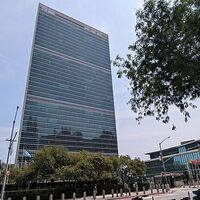
Furthermore, Niebuhr insisted that American power must be held morallyaccountable through international institutions, particularly the United Nations. The U.S. operation in Caracas, however, constituted a blatant violation of state sovereignty as enshrined inArticle 2(4) of the UN Charter. Lacking international authorization, the operation was devoid of legal and moral legitimacy and amounted to a direct challenge to an international order based on respect for sovereignty. The action conveyed the troubling message that military power ultimately has the final say. As warned by UN Secretary-General Antnio Guterres, such behavior sets adangerous precedent. The U.S. action has intensified anxieties in the Global South that sovereignty offers little protection against the coercive power of dominant states, marking a shift from international law to a realist logic in which power overrides legality.
In the international realm, Niebuhrs overriding concern was the prevention of anarchy and the preservation of a just order. While he recognized that a balance of power could serve as an instrument toward this goal, the U.S. action in Caracas undermined rather than preserved such equilibrium. The operation weakened the normative foundations of the global order. How, then, can the United States credibly condemn Russias invasion of Ukraine if its own actions disregard principles of legitimacy and sovereignty, thereby opening the door to international anarchy? Rather than demonstrating moral leadership, the operation revealed a troubling deficit of moral authority.
Undeniably, Venezuela under Maduro posed significant challenges to U.S. security interests, and the Trump administration retains the right to self-defence. Yet, for Niebuhr, self-defence must rest on afirm moral foundationand take into account broader consequences. Operation Absolute Resolve fails to meet Niebuhrian standards precisely because it abandons restraint and inflicts harm upon the just international order it claims to defend. Power was exercised with insufficient moral reflection and little regard for its long-term ramifications. Niebuhr insisted thatmilitary power must serve moral powerand when the latter is absent, what remains is political realism stripped of its Christian ethical core. Such an approach does not reflect the character of a nation genuinely committed to being under God.
Further Reading on E-International Relations
- Opinion What Has Trump Got Planned for Venezuela?
- Opinion Trumps Spectacle of Domination in Venezuela
- Opinion Venezuela and the Cost of Abandoning South American Collective Defense
- The Diffuse Unilateralism of Trumps Venezuela Intervention
- Repeating Iraq in Venezuela: Different Presidents, Same Mistake
- Opinion The Survival of Venezuelas Bolivarian Revolution
About The Author(s)
Klaus Heinrich Raditioearned his PhD in International Relations from the University of Sydney, Australia. He has recently completed a Masters degree in Theology at the Pontifical Theology Faculty of Sanata Dharma University, Indonesia, with a thesis examining the rise of China in the global order from a Niebuhrian perspective.
Editorial Credit(s)Alia Azmi
TagsDonald TrumpVenezuela